Systeme.io Review: A Practical Fit for Your First Funnel?
 OSI Affiliate Reviews DeskEditorial team
You’ve built the offer. The course is outlined, the coaching package is named, and you’re tired of trying to remember which tool holds your landing page, which one sends the follow-up sequence, and which one actually takes money. Systeme.io is the answer when you want that whole path — opt-in to checkout to course access — in one account, on one bill. We recommend it to solo course creators, coaches, and simple digital-product sellers who can live inside its plan limits and don’t need designer-grade control over every page.
Skip it if your site is the brand, or if you’ll need to stitch specialized tools together. The free plan’s real ceiling is not the 2,000-contact cap. It’s how few separate automation pieces you get.
Here’s the practical decision table we’ll unpack below.
| Question | Our read |
|---|---|
| Are you a solo operator launching a simple offer? | Systeme.io fits well. The bundle removes the integration work you’d otherwise do yourself. |
| Do you need a polished, bespoke website that is the brand? | Check the templates and editor against your requirements first. A design-first builder may be the better route. |
| Can you run on one campaign, one rule, one workflow, and one tag? | The free plan can work. If you need more separate automation pieces, you’ll be pricing Startup. |
What consolidation actually solves
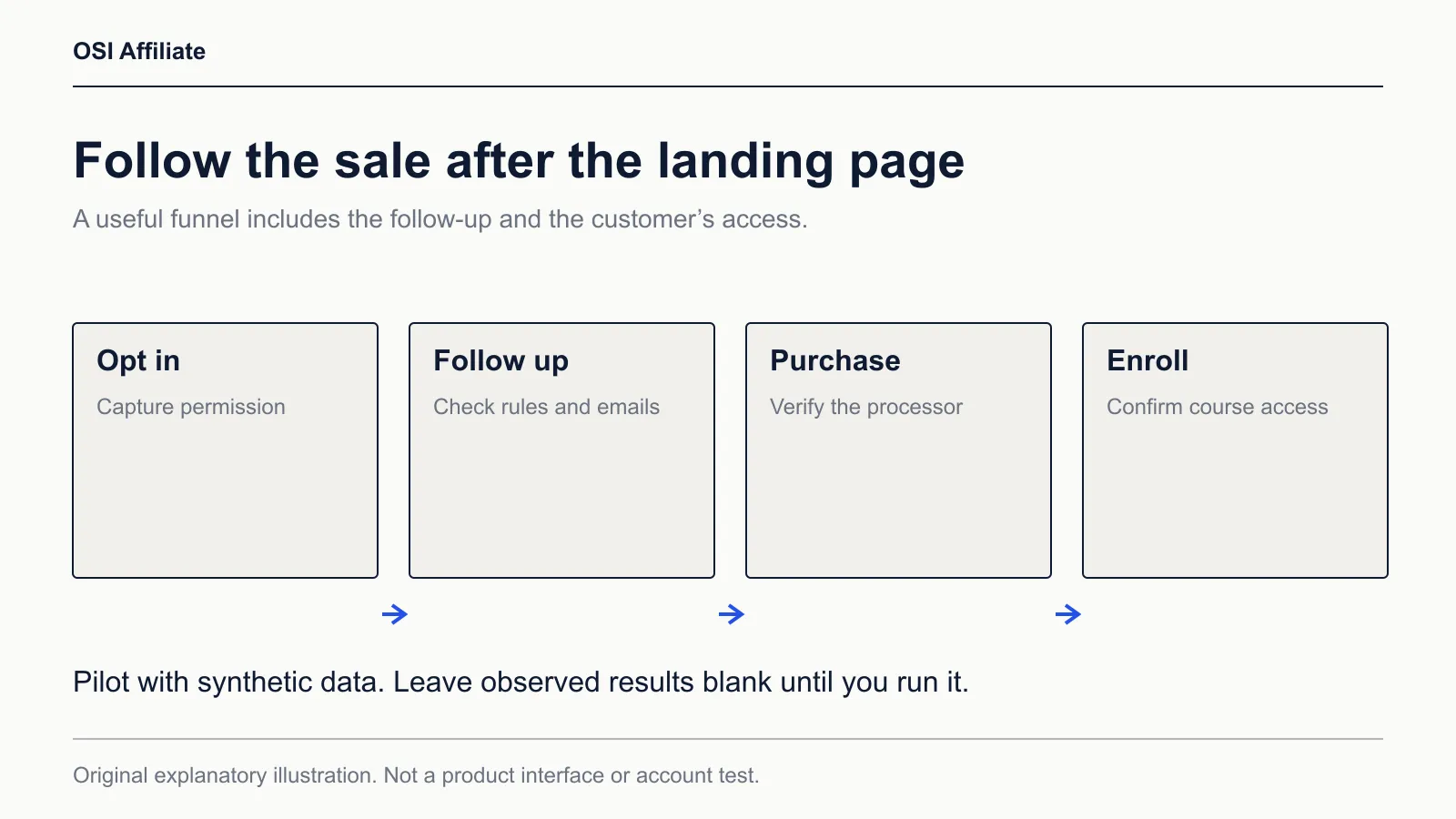
The useful way to evaluate Systeme.io is not as a website builder. It’s as an offer-to-enrollment workflow. The process that used to span a page builder, an email platform, a checkout tool, and a course host can, here, live in one system.
A contact opts in on your funnel. They’re added to your contact list and tagged. You can trigger an email sequence. They buy, and the platform can enroll them in a course and move the deal through a CRM pipeline. That’s the consolidation promise, and the documentation we reviewed shows these pieces are native: funnels, email campaigns, workflows, courses, checkout, and affiliate management. The operational gain is not having to make separate tools talk to each other, and not paying three subscriptions while you figure out which one failed to sync.
But notice the exact wording: “can.” Every one of those actions is subject to the plan’s limits.
The free plan’s binding limits
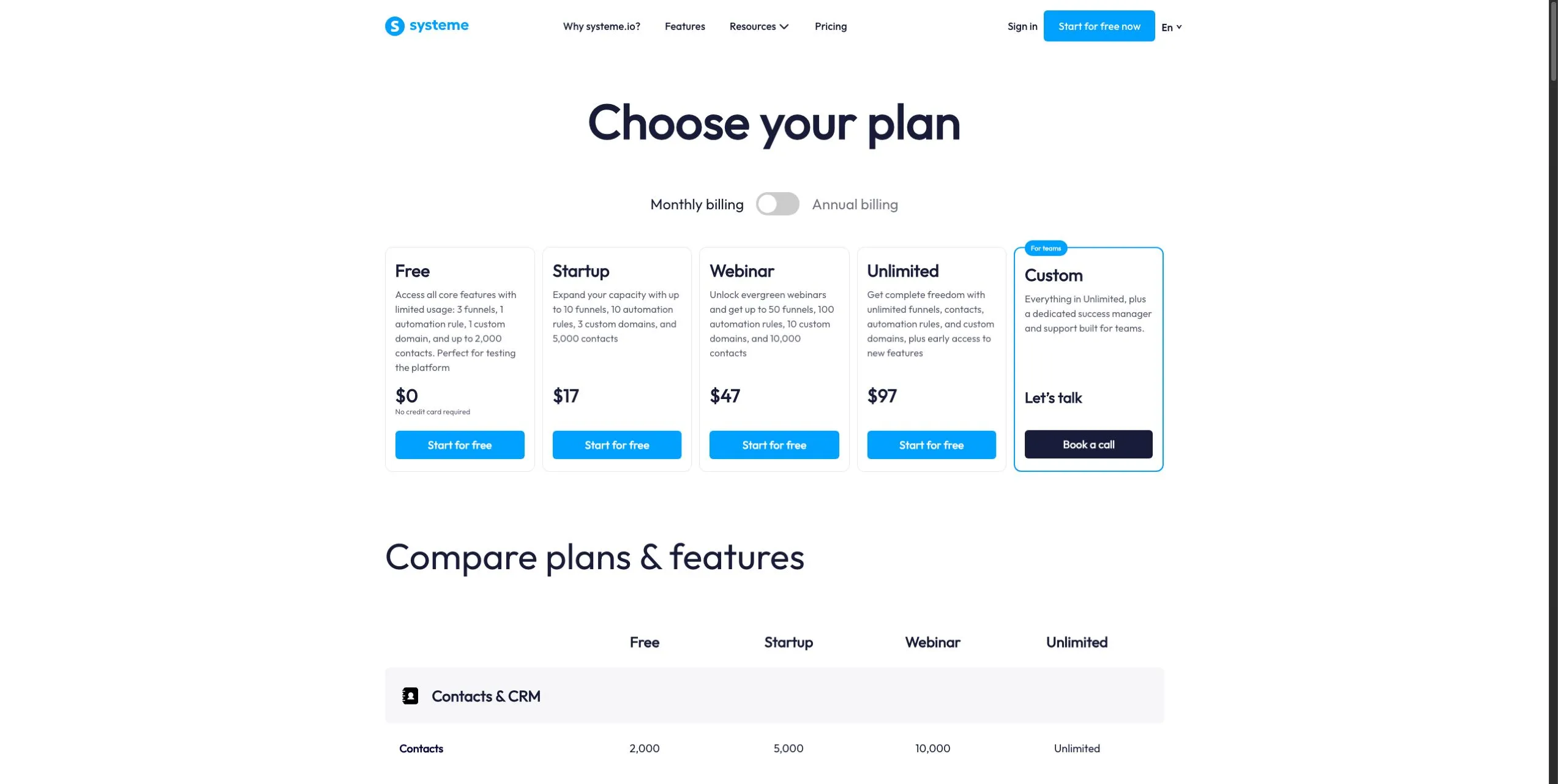
Systeme.io advertises the free plan around volume: 2,000 contacts, three funnels, and unlimited email sends. That part is accurate on the public pricing page we checked on 18 October 2026. The decision-changing limits sit elsewhere, in how few separate automation configurations the plan allows: one automation rule, one workflow, one email campaign, and one tag.
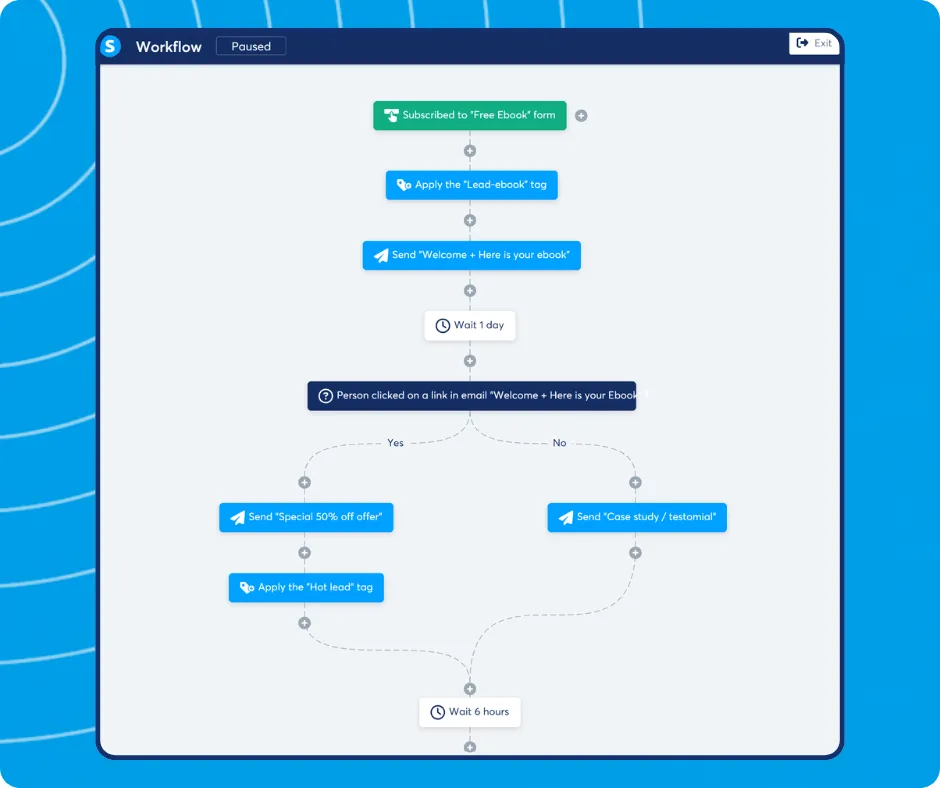
Why these counts matter: a single workflow can contain multiple steps, delays, conditions, and branches, according to Systeme.io’s automation documentation. So “one workflow” can still express a reasonable journey — a welcome sequence with a click-based branch, for example. A second campaign for a different offer, another rule, another tag for segmentation, or a second course all push you past the free allowance.
The contact cap is not the only wall. For a simple launch, you may run out of separate automation or course slots before you run out of contacts.
Plan limits that decide real workflows
We compared the four public plans on the pricing page and focused on the limits that stop a workflow, not just decorative caps.
| Item | Free | Startup $17/mo | Webinar $47/mo | Unlimited $97/mo |
|---|---|---|---|---|
| Contacts | 2,000 | 5,000 | 10,000 | Unlimited |
| Funnels / steps | 3 / 15 | 10 / 50 | 50 / 300 | Unlimited |
| Email campaigns | 1 | 10 | 100 | Unlimited |
| Automation rules | 1 | 10 | 100 | Unlimited |
| Workflows | 1 | 5 | 20 | Unlimited |
| Courses / students | 1 / 500 | 5 / unlimited | 20 / unlimited | Unlimited |
| Custom domains | 1 | 3 | 10 | Unlimited |
| CRM pipelines | 1 | 5 | 20 | 100 |
| Evergreen webinars | 0 | 0 | 10 | Unlimited |
Prices and limits are from the public pricing table rendered on 18 October 2026, in USD. All four plans include unlimited email sends, unlimited sub-accounts, and 0% Systeme.io transaction fees. That does not mean unlimited deliverability or unlimited permission to message people. It also does not make processor fees disappear; Stripe, PayPal, taxes, and any third-party costs are separate.
The entry paid upgrade is Free to Startup. That’s where you go from one rule, workflow, campaign, and tag to ten, five, ten, and ten. The pricing shape question to resolve before a pilot is: how many separate campaigns, rules, workflows, tags, and courses does your real launch actually need? For a full plan-by-plan walkthrough, our Systeme.io pricing guide covers tier selection in more detail.
What you actually get on the free plan
The free plan includes one custom domain, one course, 500 students, one tag, and a single campaign and automation. That’s enough to build a landing page, send a follow-up sequence, take a payment, and deliver course access. The vendor’s own FAQ shows the nuance: the marketing footer says “unlimited students,” but the pricing table and FAQ explicitly cap Free at 500 students. We treat the table as the authoritative current limit.
“Unlimited email sends” on every plan is also a sending-volume claim, not a deliverability promise. Sending without authenticated domain records can land you in spam folders, and Systeme.io’s help center says domain authentication is mandatory for sending. More on that below.
So the free plan is a working business path, not a demo. But it’s also a constraints exercise: one campaign, one rule, one workflow, one tag, one course. Map your launch against those counts before assuming it fits.
Checkout and the fee picture
All Systeme.io plans show 0% transaction fees from Systeme.io itself. That’s a real pricing advantage over funnel tools that take a cut on every sale, but it’s not the same as “you keep 100% of revenue.” Stripe or PayPal still charge their standard processing fee. Taxes, refunds, chargebacks, and any third-party gateway costs land on your side.
We couldn’t verify the exact Stripe or PayPal fee at checkout because we did not have an authorized account to test with. The pilot worksheet we’re including has a field for you to record the processor fee, so your revenue math reflects your real channel rather than a vendor claim.
Domains and email: two separate jobs
A setup confusion to avoid is treating “connecting my domain” and “sending from my domain” as the same task. They’re not.
Connecting your domain to a website requires adding CNAME records in your DNS host so pages resolve to your Systeme.io site. That is the “my site works at my URL” step.
Authenticating your domain to send email requires a separate set of records — three CNAMEs plus a DMARC TXT record, according to the authentication guide — so mail from your address is properly signed and less likely to be blocked. Systeme.io’s documentation says authentication is mandatory to send email and that you should preserve existing mail records rather than blindly replacing them.
The concrete risk: an owner connects the website, sees the site live, and assumes email will work. It often won’t until the second set of records is added and verified. Add both jobs to your pilot, with your domain host’s panel open.
Courses, access, and the part we couldn’t verify
The course builder includes modules, video embeds, PDF attachments, drip scheduling, module locking, quizzes, and progress tracking, according to Systeme.io’s feature and course documentation. Enrollment can be automated from a purchase. That’s the offer-to-enrollment path working as designed, on paper.
What we did not verify: how student progress survives a plan downgrade, how it behaves when mixed with community access, and whether refund or dispute paths sync cleanly with third-party processors. The public documentation didn’t answer those cleanly, and we did not have a logged-in account to test. Treat them as pilot unknowns, not confirmed successes. Since the Free plan’s 500-student cap sits below the “unlimited students” claim in the marketing footer, the internal logic that governs the cap is worth testing with a real account.
First-year cost shape
We can show the first-year shape from the monthly figures, with one caveat: the pricing page displays an annual-billing toggle that did not change the rendered amount when we checked it. So we won’t quote an annual total. If you choose annual billing, verify the checkout math before paying.
| Plan | Monthly | 12 months at listed monthly |
|---|---|---|
| Free | $0 | $0, plus processor fees on sales |
| Startup | $17 | $204, plus processor fees |
| Webinar | $47 | $564, plus processor fees |
| Unlimited | $97 | $1,164, plus processor fees |
The free-to-paid boundary is not just contact volume. It’s the counts that bind your real workflow: the one rule, one workflow, one campaign, one tag, one course, and the 500-student cap. If your launch needs more separate pieces, Startup at $17/mo is the minimum practical upgrade. You’re paying for configuration capacity before contact capacity.
We also checked the migration page: the free migration service is available only on Unlimited monthly or any annual plan. The listed scope includes funnels, products, pages, email lists, sequences, courses, students, affiliate setup, and blog content. That’s vendor-provided information, not something we tested. What full migration doesn’t prove on its own: consent labels, suppression lists, refund states, payment tokens, or course progress parity. Those are the things to inspect before you declare a move complete.
A pilot worksheet instead of implied expertise
Our Systeme.io launch pilot worksheet starts with the two DNS jobs, then walks through a single funnel with real opt-in, test-mode purchase, course enrollment, refund, and export checks. The observed-result fields are intentionally blank. You fill in what happens in your account, your market, and your payment stack.
Why this particular shape? Because every claim that matters for this product — deliverability, domain authentication, processor fees, refund timing, student progress — is either config-dependent or processor-dependent. A static worksheet that forces you to capture your own results is more honest and more useful than a review pretending to know the answer.
Here’s the minimum path before you commit to any paid plan:
- Connect the domain to the website and confirm pages load on your root URL.
- Authenticate the domain for email and send a test to an inbox on a different provider.
- Build your actual funnel shape. Count the separate campaigns, rules, workflows, tags, and courses you need, and note whether Free’s limits already block that configuration.
- Put a test-mode transaction through your processor. The Systeme.io 0% fee won’t be the only cost.
- Enroll a test student and check access, progress, and what happens after a downgrade simulation.
- Export contacts and confirm what comes out. Ask support about course media and progress portability; the public documentation we reviewed proves contact import/export, not course-content export.
Who should skip Systeme.io
Skip it if the site is the brand. The public templates we saw are functional, but we did not test the editor against a specific design brief. If a designer is involved or every page has to feel bespoke, check the template library and editor controls early — you may be better served by a design-first builder. Our website builders shortlist compares the alternatives for that job.
Skip the free migration as a reason to switch without checking: the service is real for eligible plans, but it doesn’t guarantee your consent records, suppression lists, payment tokens, or course progress come over intact. If you’re replacing a dedicated email platform, our guide on moving email platforms outlines the consent and suppression-list checks that apply before you migrate anything.
If none of those apply and your offer is one landing page, one email path, and one checkout to course enrollment, Systeme.io’s consolidation genuinely removes work.
Next action
Start with the pilot worksheet and a free account, but don’t start with the free plan as an assumption of permanence. Map your actual launch first: how many campaigns, rules, workflows, tags, and courses do you need? If Free’s single-count limits already block that configuration, price the upgrade before you invest in content. If you can run your full path within Free, verify domain authentication, processor fees, and course access, then launch.
The decision is not “free versus paid.” It’s whether your real configuration fits the free plan’s counts, and whether that trade is acceptable for the consolidation you gain.
Method, evidence limits, and disclosure
We, OSI Affiliate, published this review under our organizational byline. Our editor, working with our publication standards, reviewed Systeme.io’s current public pricing, feature, automation, course, domain, and migration pages on 18 October 2026. We did not create a Systeme.io account, start a trial, connect a domain, send a campaign, process a purchase, or enroll a student. We did not test deliverability, support response speed, page-build performance, or user interface experience.
The screenshots and images shown here are from Systeme.io’s public pages and feature documentation, captured on 18 October 2026. They are vendor-provided public materials, not evidence of an account test. The funnel interface image came from Systeme.io’s feature documentation; the pricing image from the public pricing page. No product interface was generated by us.
All plan prices, limits, and claims are attributed to Systeme.io’s public pages as of 18 October 2026 and may change. Where the public documentation conflicted — such as the footer’s “unlimited students” claim versus the pricing table’s Free 500-student cap — we treated the pricing table as the current binding limit. We did not verify the annual-billing amount because the pricing toggle did not change the displayed number during our check. The 0% transaction-fee claim applies to Systeme.io’s fee; third-party processor fees, taxes, and other costs remain separate, and we did not verify the exact processor fee.
Migration requirements and included scope came from Systeme.io’s public migration page. We did not confirm that consent labels, suppression lists, refunds, payment tokens, or course progress survive migration intact. Those remain pilot unknowns.
Where this review offers a recommendation — such as “map your launch against the free plan’s single counts” or “price the upgrade when your configuration exceeds Free” — that is editorial interpretation from the documented limits, not a measured test result. OSI Affiliate is reader-supported: we may earn a commission if you purchase through links on our site, at no extra cost to you. Commissions never affect our decisions, inclusion, or wording.
You can read more about how we select software on our How We Pick page, learn about our editorial independence on the About page, and find our full commercial disclosure on the Disclosure page. If you spot an error or a stale limit, contact us through the Contact page so we can correct it. This review last received a substantive update on 18 October 2026.

Written by
OSI Affiliate Reviews DeskEditorial team
Business-software reviews, comparisons and buying guides for small teams. We compare vendor documentation and pricing, explain the limits of our evidence, and identify affiliate links. Each guide states whether it includes account testing, public demos or documentation research.